'Writing Inspired by an Island in the Atlantic'
Beware of high flying barbecues

It started off as such a good idea. We had just moved house and the builders had thoughtfully provided a fitted barbecue area to the back terrace of our new property. All it really needed was a wire tray and charcoal. I have to confess that I am not a lover of the traditional barbecue. As a Cub Scout I could never see the point of rubbing two sticks together when I already had a cigarette lighter in totally my back pocket, which is why I never became a true Boy Scout. I guess I missed the point of the exercise. Over many summers in the UK, I tolerated clouds of black smoke making its way across my garden fence as yet another barbecue virgin was set to ruin my weekend in the garden. In Gran Canaria, my issue is with barbecued fish – it really is the most disgusting smell if you don’t happen to like fish – or badly operated barbecues for that matter.
What the barbecue virgins don’t seem to realise is that charcoal has to get hot, really hot and glow red before you even attempt to cook food. I have witnessed barbecue virgins trying to get the thing to light with firelighters, paraffin or worse. I have watched with horror as other barbecue virgins throw hunks of flesh onto barely warmed cinders in a determined effort to get food poisoning. No, I just could not tolerate charcoal. Personally, I would have been more than happy with an all electric barbecue - just as long as it was quick, clean and cooked the food. I was told that this would be a barbecue travesty and an insult to all ‘barbequers’ worldwide and that my neighbours in Gran Canaria would never speak to me again if I did. In the end, I decided to settle for bottled gas.
I searched the island high and low. From Las Palmas to Puerto Rico and from San Nicolas to Arinaga – there were no gas barbecues suitable for the brick-built creation on the patio. It was then that I hit upon the idea of checking the Argos website. They usually have everything. Perfect, I found a superb gas unit – exactly the right size and priced at only 79.99 pounds. I was returning to the UK for a brief visit, so I checked to see that they had them in stock. I reserved one to collect from a store near the airport. It would easily be accepted as hand luggage on the return flight…
I handed over my credit card to the young woman at the Argos desk and eventually my number appeared on the collections board. Before my eyes, a large cardboard box appeared on the conveyor belt. The young man struggled to lift it and placed in on the counter. I checked the catalogue number on the box – yes, it was my barbecue. I struggled to lift it and carry it to the car. I began to imagine the scenario ahead of me. Certainly, this wasn’t the stuff of hand luggage. Should I just cut and run and maybe leave it behind in the store? No, I really did want the new barbecue, but why was it so heavy?
I always admire those passengers who are able to travel light, look well dressed throughout their visit and smell relatively fresh at the end of it. I have never been able to achieve this. Try as I may, my wash bag alone is usually the entire luggage allowance allocated by airlines such Ryanair and Easyjet. I wheeled my trolley to the check in desk and I knew exactly what was going to come. “Bit overweight are we today, Sir?” commented the grinning, spotty youth on the check in desk. This was no doubt a well-planned line reserved for his more errant passengers. I was neither amused nor in a mood for a lengthy discussion as to why he had referred to me in the plural. I smiled benignly and muttered something about Christmas presents. “That will be 195 pounds to pay, Sir”. No, he didn’t really say that, did he? I thought it would be about fifty quid, not nearly two hundred just to get an eighty-pound barbecue to Madrid! Should I leave the wretched thing with the spotty youth and cut my losses? No, I really did want the barbecue. Reluctantly I handed over my credit card. “Have a good flight”, chanted the youth whose endless grinning had suddenly become a major irritation.
The arrival in Madrid airport was going to be a big problem. First, I had to track down the barbecue and ensure that it hadn’t been damaged and then somehow drag it and the rest of the luggage to another check in desk to the other side of the airport for the flight to Gran Canaria. The dreadful truth dawned. I had paid for the barbecue to be transported to Madrid and not to Gran Canaria. I would have to go though all this expense yet again! Perhaps they wouldn’t notice…
The young lady at the airline desk couldn’t have been more helpful. “I will have to charge you for your excess baggage, “she said with a charming smile. “You are very much overweight. Take this ticket to my colleague over there, pay her and then return here. You will have to take your luggage with you though”, she added as an afterthought. I struggled across to another young woman at another desk, dragging two large suitcases and the barbecue that seemed to be getting heavier by the minute. She looked at the ticket and then my luggage. Fortunately, she spoke very good English, “I will charge you only a quarter of the cost to help you”, she said, “That will be eight hundred euros”. Those words fell heavily on my ears. Eight hundred euros for an eighty quid barbecue. Where was it all going to end? Did I have enough spare funds on my card? I suddenly felt very hot and rather sick. “Did you say eight hundred euros, but you said you were going to charge me a quarter of the charge,” I protested. “Did I?” she said. “No, no, that was my bad English – I mean eighty euros”. I handed over my card, checked in the luggage and fled to the nearest bar for a very large brandy.
As I type this, the new barbecue is heating up on the terrace. It fits well and cooks perfectly. Did I mention the reason for the unit being so heavy? It was because the cooking plates and grill were cast iron!
If you enjoyed this article, take a look at my websites: http://barriemahoney.com and http://thecanaryislander.com or read my books, podcasts and blogs about living and working in Spain and the Canary Islands.
Join me on Facebook: @barrie.mahoney
© Barrie Mahoney 2026
Don’t Wish Me ‘A Happy New Year’ (a healthy one will do nicely)

I’m always uneasy about the “Happy New Year” greetings that we belt out to anyone that we meet, either on social media or in person. Whenever I hear these words, I have a mental vison of a grinning Ken Dodd, manically waving his ‘tickling stick’, whilst singing that rather troubling song ‘Happiness’. In reality, of course, we are not meant to be happy all the time, and we need the bad times to help us to appreciate the good times. I’m far happier with a greeting of “A Healthy New Year” than just focussing on the ‘Happy’ part, but I know that I am once again in danger of overthinking the issue.
It all comes back to Great Aunt Sylvie, an elderly no nonsense lady who passed several years ago. Aunt Sylvie was not the cheeriest of people, and would always respond to our New Year greetings with distain, “I never wish anyone a Happy New Year” she would snap back. I once cheekily responded with “So you want us to have a miserable New Year then?”, a comment that she rightly ignored. On another occasion, I asked her why she said this, and for once, she gave me an answer that helped me to understand a little more.
Aunt Sylvie was always one to accept a free meal if one was offered. Her home was conveniently surrounded by several chapels and churches of different faiths. Aunt Sylvie would make it her business to find out which ones were offering a “decent cooked meal” on Sundays, high days and holidays, and particularly at Christmas. Aunt Sylvie was a woman of principle and out of common decency would ensure that she attended at least one service before the intended meal; after all, she couldn’t be seen as a ‘free loader’, could she?
It was at one of these services that the young minister loudly proclaimed the evils of wishing everyone a “A Happy New Year” from the pulpit. It sounded like the kind of sermon found in various books intended for new vicars; ready-made sermons that newly qualified ministers could grab just before the Sunday morning service. The words “Happy New Year” were “A nonsense, unrealistic and dangerous in raising false hopes”; in essence it was “meaningless twaddle”, according to the young minister. Far better to wish someone a “Healthy New Year” and… Aunt Sylvie couldn’t remember the rest of the sermon, and the reasoning behind it, but it certainly made a big impression upon her, and one that she didn’t contradict for once. She had an unfortunate reputation for making loud mumblings and groans from her pew if she disagreed with a sermon, which was often the case, according to many who knew her. Indeed, Aunt Sylvie was so impressed with this sermon, and no doubt the meal that followed, that she continued to attend this particular chapel for several weeks afterwards, that is until a better offer for Sunday lunch came along.
Great Aunt Sylvie passed long ago, but her words have remained with me and I always reflect upon them at this time of the year. Although I disagreed wholeheartedly with her at the time, I now realise that the young minister was probably right, and that Aunt Sylvie did have a point, although I never heard the full explanation.
As a result, I have a conflicting view of “Happy New Year”. Whilst living in Spain and the Canary Islands, anyone that we happened to meet, particularly when taking our dogs for a walk, whether we knew them or not, would always wish us “Feliz Ano Nuevo”. Sadly, in Devon, most people simply look the other way or ignore us, unless we know them. This is yet another of the many cultural changes that we are trying to adjust to.
However you spend it, I wish you all a “Healthy, Happy and Successful New Year” and that you all continue to ‘Travel Hopefully’ throughout your lives.
Er, so sorry Aunt Sylvie.
If you enjoyed this article, take a look at my websites: http://barriemahoney.com and http://thecanaryislander.com or read my books, podcasts and blogs about living and working in Spain and the Canary Islands.
Join me on Facebook: @barrie.mahoney
© Barrie Mahoney 2026
A Mince Pie for Christmas
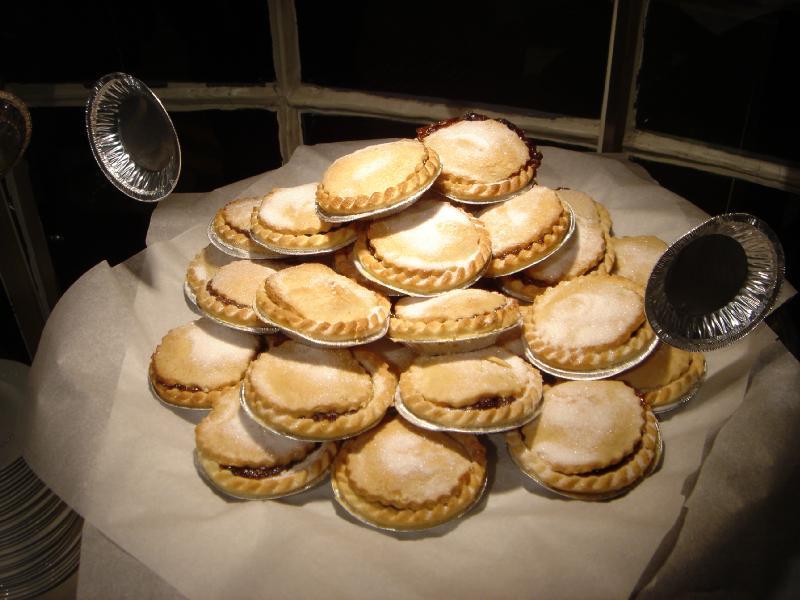
It is strange how those who have left the UK to live and work suddenly develop a craving for something that reminds them of life in their countries of origin. I guess it is not that surprising really, as Christmas is a time of the year when our memories, particularly as we get older, recall times gone by, both happy and sad. Many of those special times have occurred, of course, over the Christmas and New Year period; many of us will have fond memories of families and friends, of precious times spent together, unique family traditions, gifts and special food that appeared at this time of the year.
Since moving to Spain, I seem to have developed a craving for mince pies. When we lived in the UK I would not give a mince pie the time of day; similarly Christmas puddings, which I always used to consider to be a total waste of space and time. Why one would consume a hearty Christmas dinner, only to be followed by a plateful of thick brown stodge and custard was beyond me. I would only ever eat a spoonful of pudding to please my mother, who had made several during the summer months. You see, mother’s Christmas pudding making was a family tradition, a legend, and I can still see the huge copper boiler steaming away for what seemed like hours as she prepared puddings for Christmas Day, Boxing Day and for each of my brother’s and my own birthdays. This activity took place each summer; she did not freeze them and, I am told, they became even more delicious as the months went by. I have since learned that this was due to my mother’s generosity in a liberal application from the newly opened bottle of brandy that was part of the creation of this annual treat. I guess it was a form of embalming!
Last year, a neighbour appeared at our gate a week before Christmas, begging for help in obtaining a supply of mince pies for her Christmas party. We made a few suggestions and she went away satisfied, yet determined to track down a few boxes. Unlike in previous years, we had also found great difficulty in locating mince pies, and we crossed our fingers that our suggestions would be helpful and that it would help the party to go with a swing. A few days later, our neighbour spotted us, waved and beamed. Yes, she had tracked down two boxes - the last on the island, it seemed.
This year we went to our nearest branch of Marks and Spencer. Although a franchise of the UK store, stocking only a limited range of foodstuffs, we were very hopeful of finding some as we had allowed plenty of time before Christmas. The friendly sales assistant shook her head sadly, “No, we have none left,” she said. She noticed our disappointment and added, “I can get you some if you like.”
She picked up the phone with a flourish and called the main branch in Las Palmas and handed the phone to us. I spoke to a very helpful lady in Las Palmas, who confirmed that she had two boxes left and would send them down to our local store the following day. How’s that for service?
We now have our mince pies, and very nice they are too! I can already hear some of you thinking, “Why don’t you make your own?” Fair point, but have you tried getting a supply of mincemeat over here? Believe me, trying to explain such an item, in Spanish to bemused sales staff, really is not worth the trouble, but I will leave that story for another time!
If you enjoyed this article, take a look at my websites: http://barriemahoney.com and http://thecanaryislander.com or read my books, podcasts and blogs about living and working in Spain and the Canary Islands.
Join me on Facebook: @barrie.mahoney
© Barrie Mahoney 2025
Bigger and Better?
I wonder if anyone remembers the BBC television comedy ‘Hi-de-Hi’, which was first broadcast in the 1980s? It was classic, camp comedy, which was based upon a fantasy world of a not so glamorous ‘Butlins style’ holiday camp. Looking back, it became a kind of documentary, since I remember visiting a number of British holiday camps that were very similar to the fictional ‘Maplins’ featured in the show.
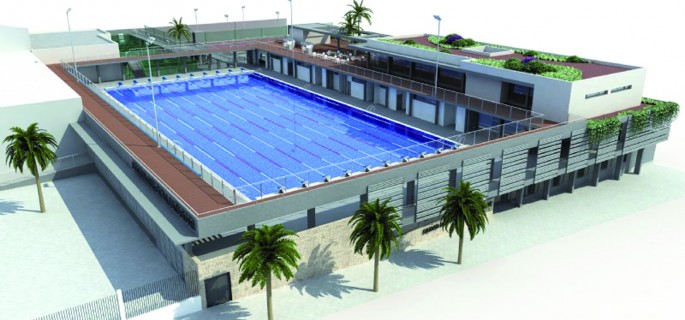
One of the more memorable characters in the show was the ‘Chief Yellowcoat’, Gladys Pugh, who would make regular radio announcements to guests, and proudly announce various events around the “Olympic size swimming pool”. Well, I am sure that Gladys, as well as campers, would be most impressed to learn that the island of Lanzarote has just opened its first Olympic size swimming pool in the town of Arrecife.
This project has included the remodelling of Lanzarote’s ‘Sports City’ at a cost of around 6 million euros, and will be the home of the island’s Youth Information Centre. This new pool will be available for top-level swimming competitions, synchronised swimming, as well as water polo.
Visitors to the Canary Islands often imagine that the sea will be warm, but forget that these islands are surrounded by the Atlantic Ocean, which is never truly warm enough to swim in. This new swimming pool will be heated from renewable energy sources, making the most of natural ventilation and light. I think Gladys would be immensely proud to announce the pool’s many new facilities to her campers.
The current trend to be ‘bigger and better’ does come with a number of risks and challenges. Perhaps one clear example of ‘shooting oneself in the foot’ may currently be seen on the island of Gran Canaria where work is currently underway to build what is touted to be “The Best Water Park in the World”, as well as “The Biggest in Europe”.
This massive project and investment is already well underway, and there is no doubt that it will provide many new employment opportunities, which it is hoped will be given to local people. This development is part of an overall plan to provide more leisure opportunities for national and international tourists. Gran Canaria is already a very popular and busy island that is trying hard to enhance its reputation for rural tourism in many of its beautiful, unspoilt and peaceful locations, so yet another, even more massive water park on the doorstep of rural tourism may seem something of a contradiction.
It is often reported that visitors are demanding yet more commercial leisure facilities to enjoy during their holidays, in addition to the many water sports already provided within a natural setting. Whether this is true, and visitors really do want to visit this beautiful island, mainly to enjoy being in the “Biggest and Best Water Park”, at the expense of destroying the natural island character that has been so popular with visitors over the years, remains to be seen.
If you enjoyed this article, take a look at my websites: http://barriemahoney.com and http://thecanaryislander.com or read my books, podcasts and blogs about living and working in Spain and the Canary Islands.
Join me on Facebook: @barrie.mahoney
© Barrie Mahoney 2025

Carry On Camping

Over the years that we have lived in the Canary Islands, we have seen a rapid increase in tourism. Much of this has been due to instability in some countries following the ‘Arab Spring’ and terrorism. The hugely successful efforts to promote island tourism by the islands’ government has also been a huge success, since there has been considerable financial and professional investment in marketing the islands in recent years. Those who know the islands well, will know that these islands have something to offer almost everyone, from lazy sun-drenched beaches, lush ancient forests to breath-taking landscapes, as well as the opportunity to engage in a wide range of sea-related sports.
The nature of tourism on the islands has changed over the years too. There is now a rapidly growing interest in rural tourism where visitors are content to relax in a rural environment, and well away from the busy tourist centres and ‘all you can eat’ hotels. We are beginning to see the opening of hostels to attract younger visitors on a tight budget, as well as for those who are happy to stay in more relaxed accommodation. Then there is the growing curse of motor caravans.
Personally, I have nothing against motor caravans. Indeed, we owned and used one for several years and had many happy and memorable holidays exploring and relaxing in the islands and highlands of Scotland. Until recently, two or three motor caravans would arrive in our village on Friday afternoons, park close to the sea, and enjoy the local restaurants and bars before leaving on Sunday afternoon. Most were couples and small families from Las Palmas who were anxious to escape city life in a quiet seaside village for the weekend, and many locals got to know these 'visitors from the city’ very well.
Over the last two years, the number of motor caravans has rapidly increased with the last count a few weeks ago being twenty-two units crammed together in a relatively small area. There are no waste disposal or water facilities nearby, and villagers were beginning to express their concerns about exactly where toilet waste was ending up.
There was also a noticeable change in the type of visitors arriving. Families and couples arriving for a quiet weekend from the city were now replaced by larger family units of children, teenagers, dogs and even cats on leads. Huge mobile caravans, usually bearing German and other European number plates, began to appear and stay for a week at a time, and sometimes longer. Often, the accommodation would be supplemented by canopies and a number of tents sited at the side of the road or pathway. Villagers taking dogs for their usual walks were unable to pass through ‘caravan city’ without dogs off leads bursting out of the motor caravans and attacking local dogs. There was a small number of the “We have a right to be here” contingent of unthinking and selfish people who were unaware of the consequences for themselves and others. This peaceful location was being ruined by loud music, barking dogs, the foul stench of barbecues and litter.
Suddenly, without warning, the local authority placed heavy concrete barriers across the road, which prevented any vehicles from entering the area. The move was done quietly without the usual noisy public meeting, petitions or any fuss that we usually have to go through to get anything done. It happened overnight and villagers were overjoyed to see the area return to its usual peaceful state.
There are officially recognised caravan parks with full facilities in the area, so campers are not being denied the opportunity to enjoy a few relaxing days away from home. I suspect that the local restaurants and bars in the village will miss their temporary customers, but most of us will not miss “Downtown”, as it became known, in the slightest.
If you enjoyed this article, take a look at my websites: http://barriemahoney.com and http://thecanaryislander.com or read my books, podcasts and blogs about living and working in Spain and the Canary Islands.
Join me on Facebook: @barrie.mahoney
© Barrie Mahoney 2025