'Writing Inspired by an Island in the Atlantic'
Another Slice of Nut Roast?
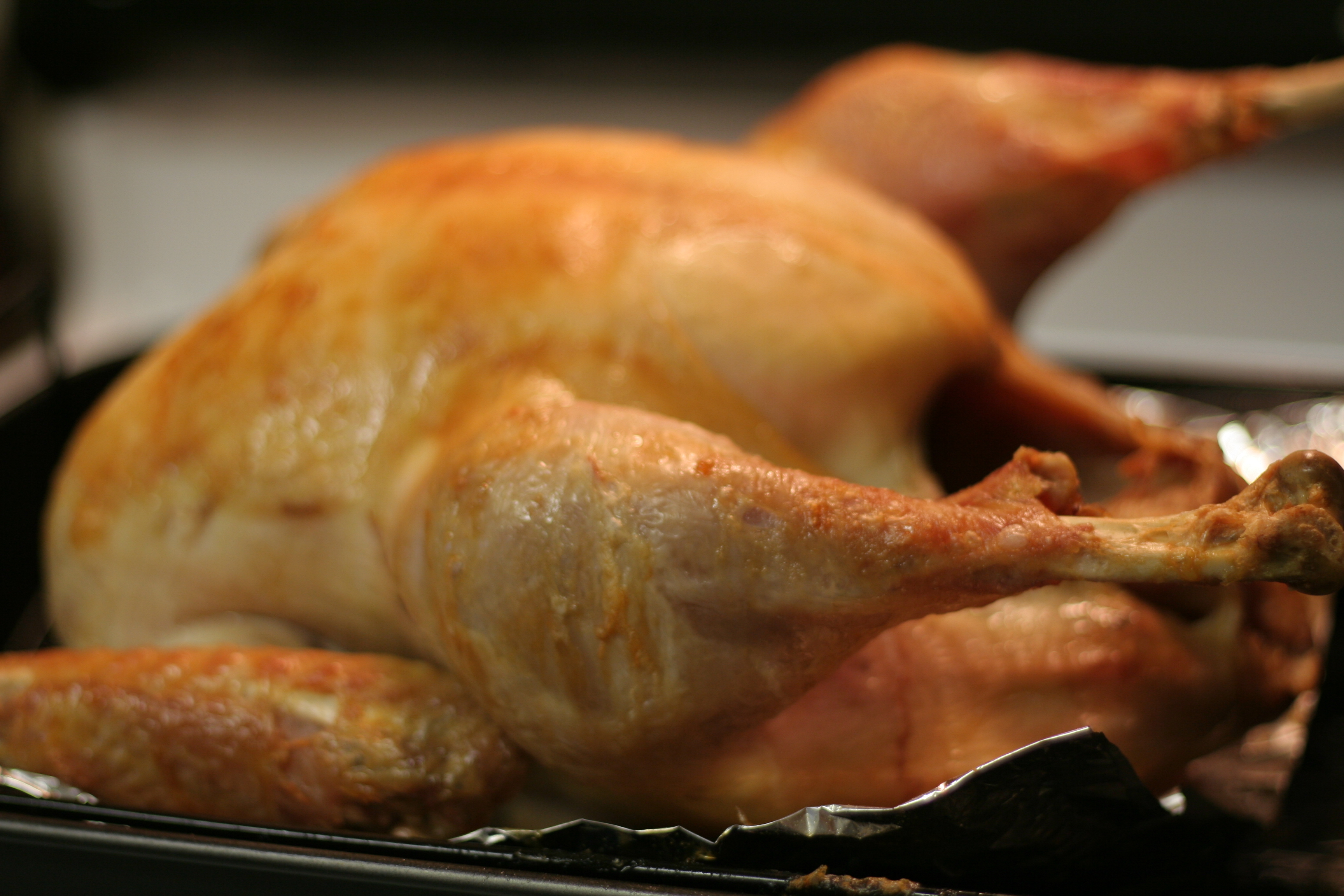
Moving to another country to live and work is a challenge in so many ways, but if you have specific dietary needs or happen to be a vegetarian or, heaven forbid, a vegan then ‘challenge’ can take on a whole new meaning.
As my partner and I are both vegetarians we expected that there would be some difficulties ahead of us; for example, I am convinced that many Spanish restauranteurs regard tuna as a plant and not a fish. Before ordering a snack or a meal in a restaurant or bar we would always carefully explain to our waiters, in Spanish as these we considered to be essential phrases, that we did not eat meat or fish and could whatever we selected from the menu be without these offending items. Spanish waiters would invariably look at us in a puzzled, if not confused manner, before uttering their usual reassurance.
“Of course, no problem,” would nearly always be the confident answer, but, invariably our salads, vegetable sandwich or croissant would arrive at our table graced with a liberal portion of tuna or, in the worst cases, chopped ham. The offending waiter always looked very disappointed when we declined to accept the offending dish and ask for another one, but this time without the dreaded tuna.
Often we would order, tortilla (Spanish omelette) knowing that the traditional Spanish tortilla, if prepared correctly, consisted of eggs, milk and potatoes. Again, this could not be taken for-granted as sometimes the chefs would add “a little extra something to make it more interesting”. This “little extra something” could range from green pepper and onion, which were acceptable, but also chopped ham, liver and, of course, tuna, which were definitely not.
Soya milk, free range eggs, tofu, Quorn and some of those delicious vegetarian ready meals, from the likes of Marks and Spencer and Tesco back in the UK, were of course no longer available to us and we had to think long and hard about what we could not eat that would not offend our long held principles. It was a problem at times, and it seemed that nearly every day we would have to explain our reasons for being vegetarian to someone.
Our first Christmas in Spain would be a challenge, we knew, but I was confident that David would, as usual, come up with a dish that would put our carnivore friends to shame.
I don’t really know how it happened. All I can say is that the transformation from being a relatively contented child to one causing concern, anger and frustration to the adults that cared for me happened very quickly. The focus for all this concern was my refusal to eat meat. My mother told me that I was about five years old, a “normal” eater and had just started school. Apparently, within a short time of being there I had been brainwashed into refusing to eat anything that had lived, breathed, walked and swam.
For a child growing up in rural fenland Lincolnshire, on the east coast of England, the large expanses of rich, dark soil that appeared to go on for ever, and the occasional farm were not the most stimulating of environments or places to find human companionship. There were few children of my age in the area and I quickly found friendship with animals – both domestic and farm animals. The farmers were a friendly enough lot – always welcoming and happy for me to play with their dogs and cats, feed the chickens and calves and see the newly hatched chicks. I used to spend a lot of time on the farms and it was only later that I found it hard to come to terms with the outcome of their business.
My parents were always happy for me to have any pet that I wanted to bring into our home – there was only one rule and that was I had to demonstrate that I could care for it properly. The consequence of this relatively relaxed approach was a cluster of companions that most people would not believe. Top of the ‘pecking order’ was Timmy, the cat - who was really a dog, Shakespeare, the goose who had escaped Christmas dinner, Sally the neurotic corgi who loved to bite anything that moved and Tommy, the rather confused barbary dove who seemed to do nothing but lay eggs and eat ‘Quaker Oats’. In addition there were rabbits, guinea pigs, hamsters, chicks, all manner of caged birds, fish, stick insects, terrapins and the odd overgrown lamb or goat – all became welcome members of my extended family. We had a rescued donkey for a time until we found him a better home in the grounds of the local children’s home. Other youngsters began to bring me their ‘friends’ to look after as well – when they had ‘tired’ of them, although my parents didn’t approve of this and thought their behaviour was “irresponsible”.
Sadly, I am still not fond of the Christmas season. Of course I enjoy the coming together of family and friends, watching children enjoy the magic of Christmas, as well as the deeper meanings and care for others that the season often brings. However, my early experiences as a child still trouble me. During this festive season, my mind goes back to the traditional celebrations in the Lincolnshire village where I grew up. In fenland Lincolnshire, meat was high on the agenda for any occasion with traditional sausages, pork pies and haslets being the stuff of celebration in many a home. Lesser known delicacies included ‘chine’ a sort of joint of ham, finely sliced across the top and stuffed with parsley and served with vinegar! As I recall this was one of the more evil concoctions that my two elder brothers loved so much. The most horrific dish, and one which still haunts me to this day, must have been – ‘brawn’ – made from boiling a pigs head. The resultant disgusting mass of jelly and meat would then form a sort of solid pudding which would then be served cold and eaten with great relish.
It was all so much worse during the Christmas and New Year period. Months of discussion seemed to centre on, “Should we have a turkey or goose this year, dear?” There were endless discussions about where we should order the poor creature from and when it should be collected. How I hated the run up to Christmas. I would see lorry loads of animals leaving the farm next door – on their way to the abattoir. Many of these animals I would have chatted to on the way to school, given a handful of hay or grass – and now the place was empty. Shed loads of chickens, geese and turkeys fell silent. I always remember a few days before Christmas when there was a lot of hushed talk between workers on the fields who would be drafted in for the great slaughter – “The Killing Night” it was romantically called. This was the night when there would be the mass breaking of necks and plucking ‘the fowl’ ready for Christmas lunch. Yes, it was time once again for that great annual cull and Christian celebration – Christmas. How I hated it. I could readily understand the part about “Peace and Goodwill to all Men, but what about the animals?”
Perhaps these early experiences explain a little as to why I gave up eating meat at such an early age. Although I did not understand the implications of animals being produced for food until much later, I had no concept of ‘vegetarianism’, and no one had ever tried to tell me not to eat meat, it just seemed to happen and be the right thing to do. The years ahead were to be a challenge – both at home and at school. My poor mother was always worried that I would die from ‘lack of nutrition’; my big brothers would tease me endlessly and chase me with chicken legs, and school dinners would continue to be a nightmare and haunt me into adulthood.
Nowadays, I am still asked the same question that I was asked at the age of five, “Why don’t you eat meat?” I still give the same answer, “I just don’t like eating my friends” or, as an alternative, “I don’t eat anything with a face or a mother”. It is not meant to be flip, petulant, or trite retort– it is just the way that I feel. Fortunately, even in Spain, we live in much more enlightened times and being a vegetarian is no longer as unusual as it was. As it turned out I did not suffer from lack of nutrition, neither am I wasting away – as anyone who know me will confirm! As I sit tucking in to my slice of nut roast and all the trimmings, I feel grateful that I can raise my glass and wish ALL my readers and listeners, “A Happy and Peaceful Christmas”.
If you enjoyed this article, take a look at my websites: http://barriemahoney.com and http://thecanaryislander.com or read my books, podcasts and blogs about living and working in Spain and the Canary Islands.
Join me on Facebook: @barrie.mahoney
© Barrie Mahoney 2025
Shining the Light
The Canary Islands are often rich in public announcements and presentations to the press, but whether well-meaning projects will actually happen is quite another matter. Over the years, I have attended many lengthy press conferences, and often with impressive audio-visual presentations from earnest members of island governments, city mayors and experts about exciting and imaginative plans for the development of these islands. Sadly, there are now numerous abandoned projects that litter my ‘Intending Projects’ folder, which include an island railway, a futuristic spaceport and a Chinese Village, to name just three on my list. Sadly, these are merely dreams that have disappeared into the ether, which I doubt will never actually come to fruition.
The impact of the recession and a changing political landscape are usually the main excuses deployed when the authorities are questioned about their failure to deliver. Still, they always provide an interesting story and a photo opportunity. Does it actually matter that they will never happen? Probably not; after all, in time, these projects will be forgotten.
Cynicism aside, I was delighted that the much discussed and planned renovation of the Maspalomas lighthouse finally happened this week. Known to the locals as ‘El Faro de Maspalomas’, this building finally reopened to the public after a ten-year delay, which this time was blamed upon the activity of termites; well, that’s a new one.
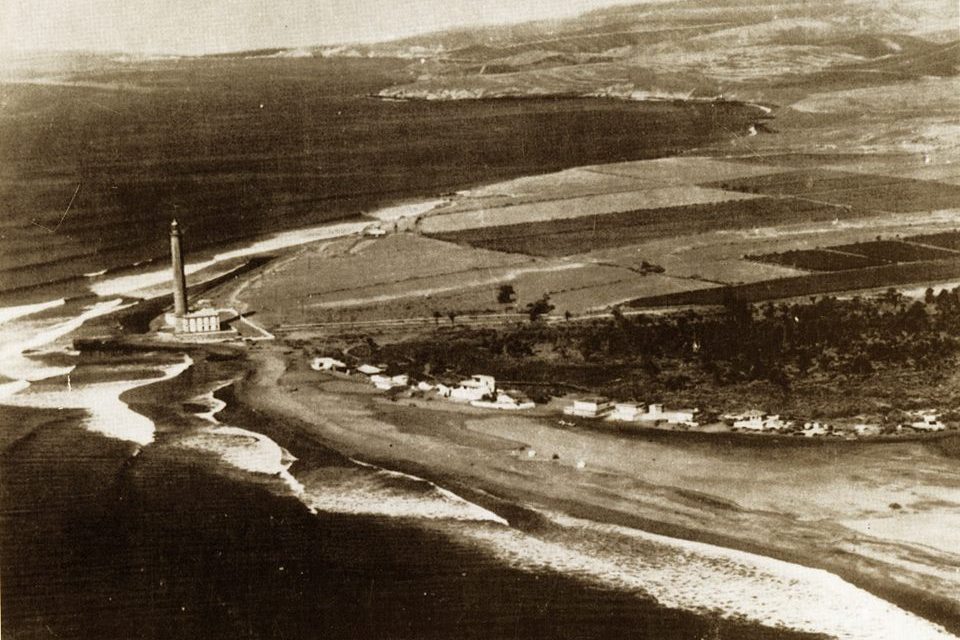
Looking at old maps and photographs of these islands always fascinates me to see that the south of Gran Canaria, as we currently know it, did not exist. There were only small clusters of fishermen’s dwellings on the coast. It was the lighthouse that stood proudly over barren land as the most significant building in the south of the island. Later, thanks mostly to European Union funding, the current network of roads and tunnels were built that allowed remote parts of the island to be connected, followed by the rapid development of the sun-drenched tourist resorts that we see today.
This lighthouse appears in nearly all brochures and publicity material relating to holidays in Gran Canaria. It is one of the oldest lighthouses in the Canary Islands, as well as the tallest masonry lighthouse. This lighthouse is still in operation, and now regarded as a Site of Cultural Interest.
It was originally built by the Las Palmas Port Authority, and designed by the famous local engineer, Juan León y Castillo. Building started in 1861 and took 28 years to complete, since all the building materials had to be brought by ship. The lighthouse shone its first light in 1890 to help ships on routes between Europe, Africa and America. The tower is 58 metres high, and was first illuminated in 1890 to guide ships crossing the Atlantic Ocean with its light that could be seen for 19 nautical miles.
The building now houses an impressive exhibition of five hundred years of island history, showcasing island products, culture, as well as the island’s rich and varied landscapes. The lighthouse now includes a tourist office, handicraft shop and an ethnographic centre that tells the island’s story from the Fifteenth to the Twentieth Century, the aboriginal era, as well as writings from travellers who passed through the Canary Islands.
The duties of the lighthouse have now shifted away from guiding ships crossing the Atlantic to boasting a new shining light that enhances lighting of the walkway in the evenings along the Meloneras seafront. It is a route taken by thousands of people each day who wish to enjoy magnificent ocean views, shopping, restaurants as well as magnificent sunsets. The light of this impressive building continues to shine brightly, as well as now sharing its story.
If you enjoyed this article, take a look at my websites: http://barriemahoney.com and http://thecanaryislander.com or read my books, podcasts and blogs about living and working in Spain and the Canary Islands.
Join me on Facebook: @barrie.mahoney
© Barrie Mahoney 2025

Too Fat to Die

At last! We have finally reached the end of the celebratory season and we can get back to something that approaches normal! By normal, I mean eating the things that we should eat and not what we want to eat. The empty box of chocolates and crisp packets are finally confined to the bin, and it is time to be eating healthy meals once again; or is it?
Despite New Year Resolutions to do better, many of us find that our obsessive natures force us into eating more of what we should avoid, to drink more when we should abstain, and that our expensive financial commitment to the gym often results in a visit to the adjacent bar. At risk of depressing readers even more, how about being faced with the idea that if we are too obese, it may not be possible to be cremated when the time comes?
Authorities in Spain’s Valencia region are considering a ban on the cremation of bodies that are too fat, simply because the burning process generates too many toxic emissions. Well, I guess it is a fair point, but was not something that I had previously considered. Many of us will be aware of trying to reduce carbon emissions; for example, in the amount of flying that we may do when going on holiday or when using our cars, but have we seriously considered being too fat when we die?
According to experts in the cremation process, people who are too fat, or maybe I should be more politically correct and refer to the ‘morbidly obese’, generate a number of serious technical issues, which includes an excessive amount of toxic emissions. Forget fancy diets and Weight Watchers; surely that fact alone is a very persuasive reason to start losing weight?
The regional health authority in Valencia has suggested the new measures as part of new rules that are aimed at reducing air pollution from cremation, and particularly the cremation of large bodies. Other measures include a ban on cremating the bodies of people who had received treatment for cancer that used radioactive needles in the process.
In addition, a ban on cremating coffins that contain resins, plastics or other elements that could create highly toxic substances is being considered. So, if your preference is for a coffin that contains lead or zinc, or if you would like to be cremated with your best jewellery or indeed your mobile phone, just forget it. I find this rule quite depressing since I do not intend leaving my new iPhone behind for any reason.
Readers will be relieved to know that the draft regulations insist that new crematoria have to be built at least 200 metres from homes, health centres, schools, parks and sports facilities. This is a very sensible idea, since the pungent aroma of a permanent barbecue would almost certainly reduce house prices.
Well, that is my contribution to healthy living for the New Year, which I am sure will help us all to follow sensible dietary guidance for the year ahead. If we really do feel unable to ‘fight the flab’ I guess the alternative is always burial at sea, but that has its own issues and is a story for another time.
If you enjoyed this article, take a look at my websites: http://barriemahoney.com and http://thecanaryislander.com or read my books, podcasts and blogs about living and working in Spain and the Canary Islands.
Join me on Facebook: @barrie.mahoney
© Barrie Mahoney 2025
What’s in a Name?
Now here’s an essential question to start the day. Are you sufficiently worthy to have an airport named after you, and presumably after you die? Alternatively, if you don’t consider that you meet these high specifications, do you know someone who does?
I have never been too sure about the wisdom of naming airports after people. If, for example, I wish to fly to Paris, I wish to fly to Paris and not into the arms of someone called Charles de Gaul. Why do airports in the United States have to be named after past Presidents? Washington National Airport used to be called just that until it was renamed the Ronald Reagan Airport; surely it was already named after a President called Washington, so I fail to see the point. In any case, just think of all those costs associated with new signs.
Despite some reservations, I was very pleased to hear that the island of Lanzarote will shortly be changing the name of its airport to Cesar Manrique. This name change has been requested by many residents for some time and was recently agreed by both the Prime Minister of Spain, Pedro Sanchez, and the President of the Canary Islands, Fernando Clavijo. As an admirer of the work of Cesar Manrique, I believe this to be an excellent choice in honouring someone who made a considerable and positive impact upon the island of Lanzarote, as well as the other islands in terms of architecture and the environment. Despite this endorsement, I am also well aware that there will be others who will see the change of airport name as controversial.
Other airport naming controversies include renaming the island of Madeira’s airport to Cristiano Ronaldo International; I’m not too sure what the Spanish taxman thought of that particular honour. Anyone remember the footballer, George Best? In memory of both his on- and off-pitch antics, Belfast City Airport has become George Best Belfast City Airport; what a mouthful! Whether he is considered a footballing hero or not, many will be pleased to know that it has a rather good duty free shop, which might be thought appropriate.
Over in Jamaica, I gather that the locals were not impressed when their airport was renamed after a part-time resident and author of novels about a British spy called James Bond. Many protested that the airport should have been named after a true islander, such as Usain Bolt, and not Ian Fleming.
John Lennon, Louis Armstrong, Mozart, Bill and Hilary Clinton, Marco Polo and even Robin Hood are all preserved for posterity in the names of some of the world’s airports. Interestingly, the UK’s Civil Aviation Authority has banned the official naming of British airports after famous people in the future, which I think is an excellent decision. Personally, I would much rather the airport be named after the place that I am travelling to rather than someone I have never heard of, or have no interest in. I am also very grateful that I am spared from flying to Margaret Thatcher International, but I guess whether or not you will agree will depend upon your own political point of view.
If you enjoyed this article, take a look at my websites: http://barriemahoney.com and http://thecanaryislander.com or read my books, podcasts and blogs about living and working in Spain and the Canary Islands.
Join me on Facebook: @barrie.mahoney
© Barrie Mahoney 2025
Wells Are For Life and Not to Hide Corpses
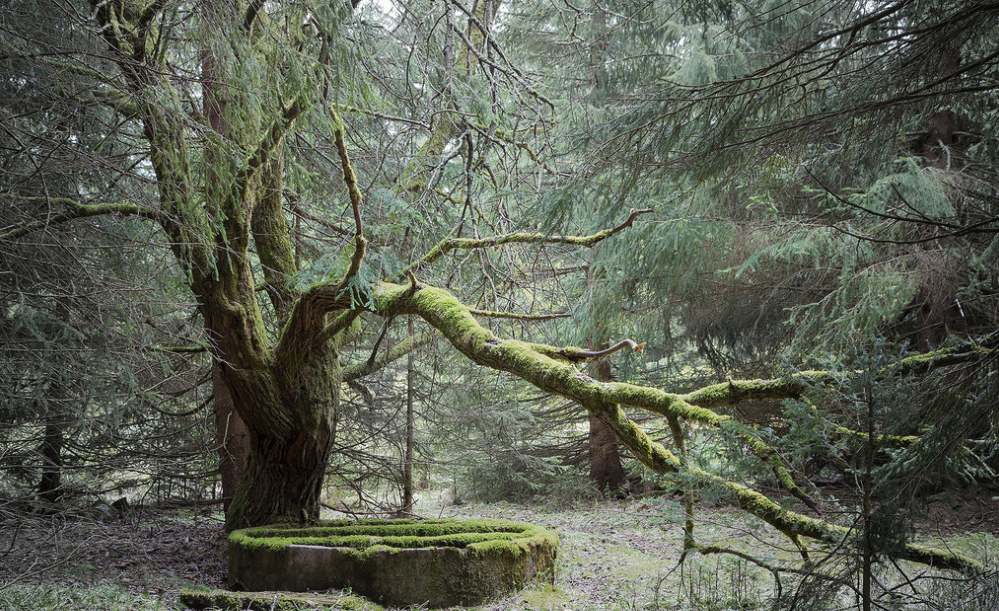
Many people do not realise that the Spanish Civil War of 1936 actually began in the Canary Islands. Francisco Franco was General Commandant of the Canary Islands, who was based in Las Palmas de Gran Canaria. It was here that Franco plotted his strategy, well away from the rest of Spain, before he headed to the Spanish Peninsular. It was under his watch that Spain became divided into two factions: ‘Republican’ and ‘Loyalists’.
The Spanish Civil War began on July 18, 1936, as a revolt by right-wing Spanish military officers in Spanish Morocco that spread to Peninsular Spain. Franco broadcast his message from the Canary Islands, which called for all army officers to join the uprising and overthrow Spain’s leftist Republican government.
The Republicans and the Nationalists secured their territories by executing thousands of suspected political opponents. The horrors of the Spanish Civil War are still very raw in Spain and the Canary Islands, and continue to have a significant impact upon the loyalties and divisions of all the islands; the scars of which remain today.
Recently, archaeologists excavated a well in Tenoy in Gran Canaria, finding the bones of at least 12 people, including a skull with a gunshot wound. This was one of the places where local people experienced the horrors and repression of the Spanish Civil War.
The old well of Tenoy, in the municipality of Arucas, is one of the places where 140 inhabitants of the north of Gran Canaria disappeared in March 1937. It is believed that these victims were assassinated after spending months in one of Franco’s concentration camps for being loyal to the Second Republic. The project has so far found half a million human bones, a Republican coin, buckles, soles of traditional shoes and ammunition.
Some of the evidence comes from a direct and tragic account of the incident from a Galdar resident, who had been shot at the entrance to the Tenoy well. His friend rescued him and moved him to a safe house. Over the years, the contents of this well became buried with tons of mud and lost memories.
Other wells are also being searched on the island, including Llano de las Brujas, where 24 bodies were recovered. In addition, the search for people missing during the Franco dictatorship led to mass graves in the cemeteries of Vegueta and Sima de Jinamar.
The excavations of wells on the island reveal some of the horrors of the Spanish Civil War. It tells the story of how local residents of Gran Canaria who opposed the ruling class were often placed in concentration camps, killed and their bodies hidden in wells.
As one descendent, who has spent her life searching for the body of her murdered father, has so eloquently put it, “Wells are not meant to hide corpses. Wells are to give life. I want to put the bones of my father where they should be, in the cemetery”. It is a tragic history, but maybe finding some of the missing bodies and giving them an appropriate burial will help to ease some of the pain and provide closure for their families.
© Barrie Mahoney 2025
To find out more about Barrie, his blogs, podcasts and books, go to: http://barriemahoney.com/