'Writing Inspired by an Island in the Atlantic'
A Mince Pie for Christmas
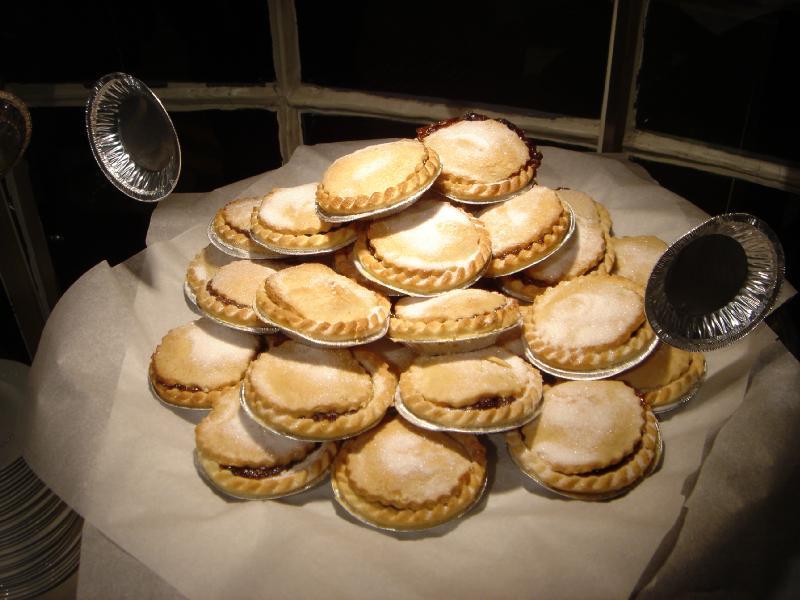
It is strange how those who have left the UK to live and work suddenly develop a craving for something that reminds them of life in their countries of origin. I guess it is not that surprising really, as Christmas is a time of the year when our memories, particularly as we get older, recall times gone by, both happy and sad. Many of those special times have occurred, of course, over the Christmas and New Year period; many of us will have fond memories of families and friends, of precious times spent together, unique family traditions, gifts and special food that appeared at this time of the year.
Since moving to Spain, I seem to have developed a craving for mince pies. When we lived in the UK I would not give a mince pie the time of day; similarly Christmas puddings, which I always used to consider to be a total waste of space and time. Why one would consume a hearty Christmas dinner, only to be followed by a plateful of thick brown stodge and custard was beyond me. I would only ever eat a spoonful of pudding to please my mother, who had made several during the summer months. You see, mother’s Christmas pudding making was a family tradition, a legend, and I can still see the huge copper boiler steaming away for what seemed like hours as she prepared puddings for Christmas Day, Boxing Day and for each of my brother’s and my own birthdays. This activity took place each summer; she did not freeze them and, I am told, they became even more delicious as the months went by. I have since learned that this was due to my mother’s generosity in a liberal application from the newly opened bottle of brandy that was part of the creation of this annual treat. I guess it was a form of embalming!
Last year, a neighbour appeared at our gate a week before Christmas, begging for help in obtaining a supply of mince pies for her Christmas party. We made a few suggestions and she went away satisfied, yet determined to track down a few boxes. Unlike in previous years, we had also found great difficulty in locating mince pies, and we crossed our fingers that our suggestions would be helpful and that it would help the party to go with a swing. A few days later, our neighbour spotted us, waved and beamed. Yes, she had tracked down two boxes - the last on the island, it seemed.
This year we went to our nearest branch of Marks and Spencer. Although a franchise of the UK store, stocking only a limited range of foodstuffs, we were very hopeful of finding some as we had allowed plenty of time before Christmas. The friendly sales assistant shook her head sadly, “No, we have none left,” she said. She noticed our disappointment and added, “I can get you some if you like.”
She picked up the phone with a flourish and called the main branch in Las Palmas and handed the phone to us. I spoke to a very helpful lady in Las Palmas, who confirmed that she had two boxes left and would send them down to our local store the following day. How’s that for service?
We now have our mince pies, and very nice they are too! I can already hear some of you thinking, “Why don’t you make your own?” Fair point, but have you tried getting a supply of mincemeat over here? Believe me, trying to explain such an item, in Spanish to bemused sales staff, really is not worth the trouble, but I will leave that story for another time!
If you enjoyed this article, take a look at my websites: http://barriemahoney.com and http://thecanaryislander.com or read my books, podcasts and blogs about living and working in Spain and the Canary Islands.
Join me on Facebook: @barrie.mahoney
© Barrie Mahoney 2025
Bigger and Better?
I wonder if anyone remembers the BBC television comedy ‘Hi-de-Hi’, which was first broadcast in the 1980s? It was classic, camp comedy, which was based upon a fantasy world of a not so glamorous ‘Butlins style’ holiday camp. Looking back, it became a kind of documentary, since I remember visiting a number of British holiday camps that were very similar to the fictional ‘Maplins’ featured in the show.
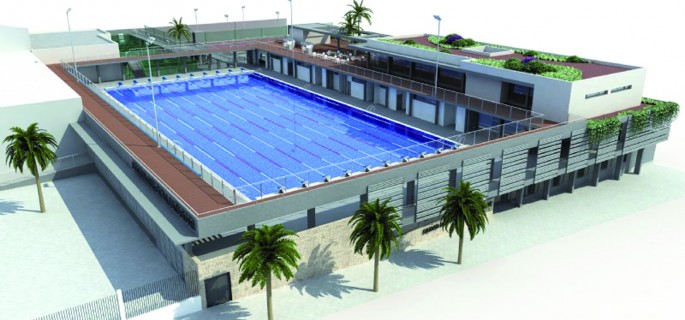
One of the more memorable characters in the show was the ‘Chief Yellowcoat’, Gladys Pugh, who would make regular radio announcements to guests, and proudly announce various events around the “Olympic size swimming pool”. Well, I am sure that Gladys, as well as campers, would be most impressed to learn that the island of Lanzarote has just opened its first Olympic size swimming pool in the town of Arrecife.
This project has included the remodelling of Lanzarote’s ‘Sports City’ at a cost of around 6 million euros, and will be the home of the island’s Youth Information Centre. This new pool will be available for top-level swimming competitions, synchronised swimming, as well as water polo.
Visitors to the Canary Islands often imagine that the sea will be warm, but forget that these islands are surrounded by the Atlantic Ocean, which is never truly warm enough to swim in. This new swimming pool will be heated from renewable energy sources, making the most of natural ventilation and light. I think Gladys would be immensely proud to announce the pool’s many new facilities to her campers.
The current trend to be ‘bigger and better’ does come with a number of risks and challenges. Perhaps one clear example of ‘shooting oneself in the foot’ may currently be seen on the island of Gran Canaria where work is currently underway to build what is touted to be “The Best Water Park in the World”, as well as “The Biggest in Europe”.
This massive project and investment is already well underway, and there is no doubt that it will provide many new employment opportunities, which it is hoped will be given to local people. This development is part of an overall plan to provide more leisure opportunities for national and international tourists. Gran Canaria is already a very popular and busy island that is trying hard to enhance its reputation for rural tourism in many of its beautiful, unspoilt and peaceful locations, so yet another, even more massive water park on the doorstep of rural tourism may seem something of a contradiction.
It is often reported that visitors are demanding yet more commercial leisure facilities to enjoy during their holidays, in addition to the many water sports already provided within a natural setting. Whether this is true, and visitors really do want to visit this beautiful island, mainly to enjoy being in the “Biggest and Best Water Park”, at the expense of destroying the natural island character that has been so popular with visitors over the years, remains to be seen.
If you enjoyed this article, take a look at my websites: http://barriemahoney.com and http://thecanaryislander.com or read my books, podcasts and blogs about living and working in Spain and the Canary Islands.
Join me on Facebook: @barrie.mahoney
© Barrie Mahoney 2025

Carry On Camping

Over the years that we have lived in the Canary Islands, we have seen a rapid increase in tourism. Much of this has been due to instability in some countries following the ‘Arab Spring’ and terrorism. The hugely successful efforts to promote island tourism by the islands’ government has also been a huge success, since there has been considerable financial and professional investment in marketing the islands in recent years. Those who know the islands well, will know that these islands have something to offer almost everyone, from lazy sun-drenched beaches, lush ancient forests to breath-taking landscapes, as well as the opportunity to engage in a wide range of sea-related sports.
The nature of tourism on the islands has changed over the years too. There is now a rapidly growing interest in rural tourism where visitors are content to relax in a rural environment, and well away from the busy tourist centres and ‘all you can eat’ hotels. We are beginning to see the opening of hostels to attract younger visitors on a tight budget, as well as for those who are happy to stay in more relaxed accommodation. Then there is the growing curse of motor caravans.
Personally, I have nothing against motor caravans. Indeed, we owned and used one for several years and had many happy and memorable holidays exploring and relaxing in the islands and highlands of Scotland. Until recently, two or three motor caravans would arrive in our village on Friday afternoons, park close to the sea, and enjoy the local restaurants and bars before leaving on Sunday afternoon. Most were couples and small families from Las Palmas who were anxious to escape city life in a quiet seaside village for the weekend, and many locals got to know these 'visitors from the city’ very well.
Over the last two years, the number of motor caravans has rapidly increased with the last count a few weeks ago being twenty-two units crammed together in a relatively small area. There are no waste disposal or water facilities nearby, and villagers were beginning to express their concerns about exactly where toilet waste was ending up.
There was also a noticeable change in the type of visitors arriving. Families and couples arriving for a quiet weekend from the city were now replaced by larger family units of children, teenagers, dogs and even cats on leads. Huge mobile caravans, usually bearing German and other European number plates, began to appear and stay for a week at a time, and sometimes longer. Often, the accommodation would be supplemented by canopies and a number of tents sited at the side of the road or pathway. Villagers taking dogs for their usual walks were unable to pass through ‘caravan city’ without dogs off leads bursting out of the motor caravans and attacking local dogs. There was a small number of the “We have a right to be here” contingent of unthinking and selfish people who were unaware of the consequences for themselves and others. This peaceful location was being ruined by loud music, barking dogs, the foul stench of barbecues and litter.
Suddenly, without warning, the local authority placed heavy concrete barriers across the road, which prevented any vehicles from entering the area. The move was done quietly without the usual noisy public meeting, petitions or any fuss that we usually have to go through to get anything done. It happened overnight and villagers were overjoyed to see the area return to its usual peaceful state.
There are officially recognised caravan parks with full facilities in the area, so campers are not being denied the opportunity to enjoy a few relaxing days away from home. I suspect that the local restaurants and bars in the village will miss their temporary customers, but most of us will not miss “Downtown”, as it became known, in the slightest.
If you enjoyed this article, take a look at my websites: http://barriemahoney.com and http://thecanaryislander.com or read my books, podcasts and blogs about living and working in Spain and the Canary Islands.
Join me on Facebook: @barrie.mahoney
© Barrie Mahoney 2025
Win a House for Five Euros!

I have never liked gambling or entered a betting office, and I do not buy lottery tickets. Indeed, the only gambling that I confess to was spending a quarter in a slot machine in Las Vegas many years ago, since my fascination with the technology on display in that fascinating ‘hell on earth’ was a temptation that I could not avoid.
My reasons are simple and based upon the Quaker principles that I have always admired and tried to follow, with varying degrees of success I might add. I have always believed that gambling is similar to currency speculation and dealing in stocks and shares; some people gain at the expense of others who often cannot afford to take a loss. I refuse to bet on dogs and horses too, simply because of the cruelty that is always involved when animals are used and exploited for sport. My own dealings with an animal charity in the UK that has a focus on rescuing greyhounds that were of no more use on the racetrack, and were simply disposed of, was just one experience that confirmed my belief. No doubt some will dismiss my views as both simplistic and unrealistic, but we all have moral choices and decisions to make in life. Despite my objection to gambling, I was fascinated to read that I had an opportunity to buy a home in Spain for just 5 euros when a flyer dropped through our letterbox last week.
“This is the opportunity to have your dream home in the sun - for only 5 euros” screamed the headline. This was a raffle offering an opportunity to win a fully refurbished home, with 200 square metres of space, two bedrooms, bathroom, storage room, basement, living room, dining room, kitchen and sun terrace. This lovely residence is set in a pretty village, just minutes from the beach and the mountains. How could I, or anyone, refuse such an offer? Upon further investigation, I discovered that there are 70,000 raffle tickets and if all are sold, the owner will earn 350,000 euros, less expenses, which is not a bad return on a property that I suspect is worth considerably less.
The idea is simple, and is a pioneering business in Spain that is dedicated to raffling off unwanted properties. After the recession, there were and still are many unwanted properties in Spain. Some are mortgage foreclosures that have been reclaimed by the banks, whilst others are properties belonging to those whose circumstances in life have changed, such as redundancy, illness, death of a partner or relationship breakdown. Many people feel trapped in their homes, because they have been unable to sell their properties. Traditional buyers of properties often find it difficult to raise the 20 per cent deposit that banks require for a mortgage, and the lottery idea seems to have created new hope for many would-be sellers, as well as potential buyers.
Raffling off properties seems to be a growing trend in parts of the country with buyers participating from all over the world. The lottery company charges for a personalised website, consultancy, raffle publicity and the legalities of the operation. The winner of the lottery takes the house, and all costs associated with changing the name on the deeds are covered by the owner.
It does seem to be an interesting and creative idea, which has gained the approval of the Spanish Housing and Finance Ministries. Maybe it is not a good idea to invest your life savings in buying tickets, but I guess that the odd five euros can do no harm. If any reader has used a lottery to sell their property, or maybe won their home in this way, do please let me know.
If you enjoyed this article, take a look at my websites: http://barriemahoney.com and http://thecanaryislander.com or read my books, podcasts and blogs about living and working in Spain and the Canary Islands.
Join me on Facebook: @barrie.mahoney
© Barrie Mahoney 2025
Use It or Lose It!

It was really good to read in the news this week that the Canary Island of Fuerteventura will once again provide a Beach Library at the beach of Los Pozos. It is a simple concept, users can read books and magazines, as well as participating in a range of activities, such as sports and workshops connected to reading. This library will include books in various languages, and readers can even take their book home with them to finish reading. Exciting stuff, isn’t it?
Wait a minute, isn’t this what we used to have in the UK, but admittedly without a view of the beach? Sadly, the last time I visited the UK, my local library had closed and is now a tyre depot. Similarly, many other local libraries are under threat of either closure or have been handed over to well-meaning groups of volunteers who are responsible for maintaining and funding its continued existence.
I have spent most of my working life encouraging children and adults to read, and hopefully nurturing a love of books, as well as teaching how to access relevant information, which has become increasingly important at this time of ‘fake news’. No, I don’t always mean stuffy old print books, but all manner of electronic media, Kindles, e-readers, iPads and the like. When a gift is required, my first inclination and preference is always to give a good book, rather than a stuffed toy or a computer game. Does it really matter? Have I really wasted my time (and money)? Does anyone value books and read for pleasure anymore?
What is happening to all those wonderful (and not so wonderful) buildings that used to be a storehouse of magic and information in the UK? Figures from 2017 show that around 500 libraries have closed in England, Scotland and Wales. Whatever happened to the idea of libraries as information points, which include access to computers, as well as books? Not everyone has access to, or can afford a smartphone or a computer. Knowledgeable and supportive staff are needed to help the elderly, the homeless, and the disadvantaged to access information. One quarter of all library jobs in the UK, which is around 8000 staff, have disappeared over the last few years. I recall the mother of David Cameron, the UK’s previous Prime Minister, campaigning vigorously to keep her local library open; so maybe it does matter.
“Ah yes”, we are told “this is the result of the recession…” During the same period that libraries closed, around 15,000 volunteers were recruited. As well-meaning as volunteers are, they are no longer appointed to assist full-time, professional staff, but to replace them. As well as exploiting the good nature and willingness of volunteers, it devalues the professionalism and dedication of well-trained, professional and experienced library staff. Presumably, the next step will be to replace full time teachers and nurses with well-meaning volunteers?
When a branch of House of Fraser or Marks and Spencer closes, there is a huge outcry and protests at this “hideous distortion of the High Street”, but is there the same outcry and defence of a local library when it is handed over to local volunteers or, worse still, closed? “Oh, we can get it all on line” is the predictable response, but is this true?
A well-run and well-managed library is of tremendous benefit to the whole community. As well as a providing a source of richness and magic, libraries provide easy and ready access to a confusing world of information. I wonder if any reader has applied for the new Universal Credit? I don’t know that much about it, but I do know that there are many who cannot access the information simply because they do not have ready access to a smartphone or a computer. A library with trained and knowledgeable staff on hand to provide help and advice is essential in assisting claimants to negotiate the minefield of this benefit.
Libraries also provide solid defence against the modern scourge of loneliness faced by many elderly, as well as younger people. It is a safe space that offers shared experiences and a chance to be with people, as well as keeping warm during those cold winter days, and without having to spend any money.
If libraries didn’t already exist, we would be busy inventing them. Thankfully, my experiences in Spain’s libraries tell me that they are mostly valued, well used and comparatively well-funded to their UK counterparts. As for that wonderful Beach Library in Fuerteventura; I cannot wait to visit it.
© Barrie Mahoney 2025
To find out more about Barrie, his blogs, podcasts and books, go to: http://barriemahoney.com/
